
Israel’s ‘state of emergency’ continues its colonial structure of repression and dispossession
Shortly after Israel illegally attacked Iran, initiating US-Israeli military aggression and provoking regional war, Israel imposed a total military closure on the occupied West Bank and East Jerusalem. Through this move, Israel continues its longstanding annexation and ethnic cleansing efforts, which the Israel Knesset has publicly approved on February 8, 2026. Israeli forces closed streets between villages, sealed roads, and restricted movement, effectively isolating Palestinian cities from nearby towns and villages.
“Operation Lion’s Roar”
Israeli occupation forces announced a complete closure of all land crossings and entry points into the occupied Palestinian territories, including the Rafah border crossing, effective from 1 March until further notice. Israel prohibits Palestinians from traveling, allowing only a very limited number of individuals holding “essential worker” permits to pass through specific crossing points. Israeli officials have not disclosed the details of these crossing points.
Gaza
By closing the Rafah crossing and continuing its genocide, Israel is driving Gaza toward the exhaustion of its already limited fuel supplies and food stocks in a deliberate effort to starve the population. Israel reopened the crossing only one month ago, after keeping it closed for more than two years.
Occupied Jerusalem
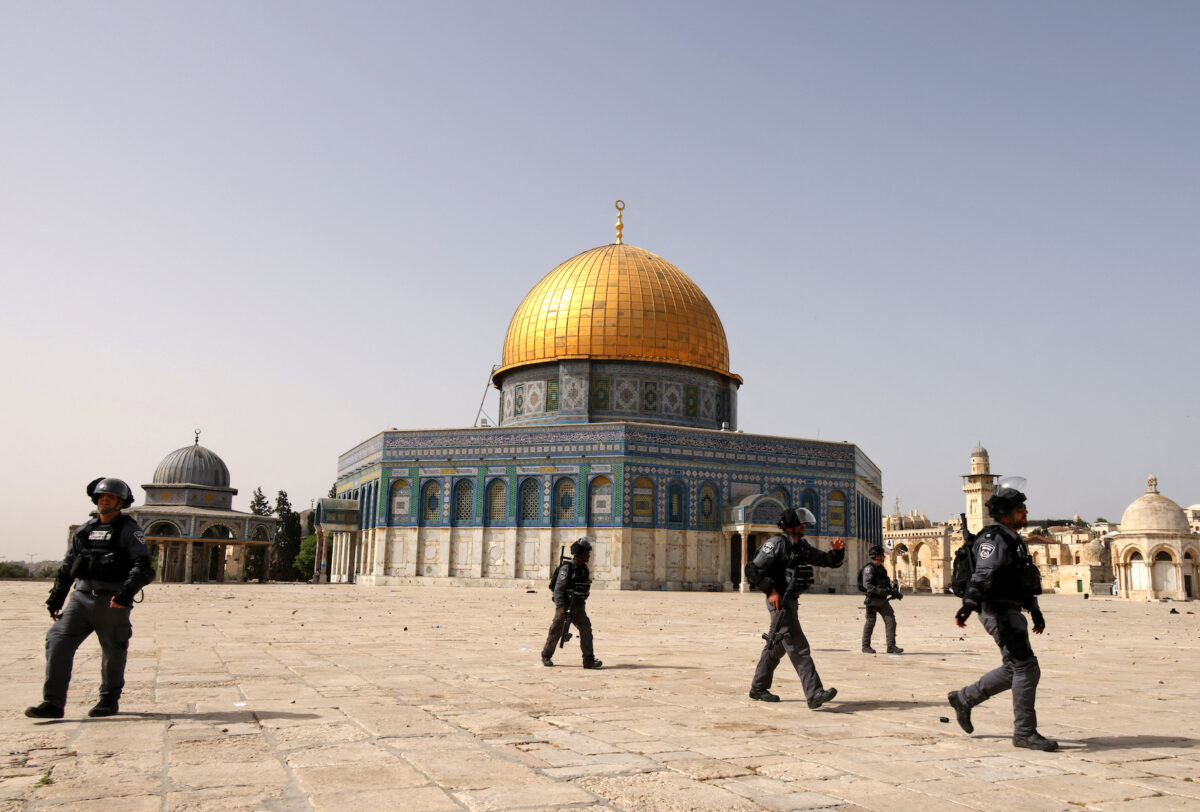
For the third consecutive day, Israeli occupation forces maintained a military lockdown on Al-Aqsa Mosque (and on the Ibrahimi Mosque in Hebron) as well as the Old City in occupied Jerusalem, to facilitate settler attacks.
Israeli forces prevented worshippers from entering the mosque and barred them from performing Isha and Taraweeh prayers during the holy month of Ramadan. On Saturday morning, forces expelled worshippers from the compound and sealed its gates, initiating the closure.
In Jerusalem, Israeli forces injured two Palestinians and burned a house during a raid on Qalandiya refugee camp and the town of Kufr Aqab by firing tear gas canisters.
Occupied West Bank
Israel has long exploited “state of emergency” as policy to advance its settler-colonial projects in Palestine. Israeli settlers and army exploit the lockdown and the world’s attention to the regional war, to expand their theft and control of Palestinian land. Israeli forces have detained 45 Palestinians across the occupied West Bank.
In the town of Dura, south of Hebron, Israeli forces killed 25-year-old Muhammad Jihad Masalmeh, who succumbed to critical wounds after Israeli occupation forces shot him during a raid the previous night.
On 2 March, Israeli settlers attacked the village of Qaryut, south of Nablus, killing two brothers and wounding several others. Settlers fired directly into Palestinian homes and killed 52-year-old Mohammad Taha Muammar, who was shot in the head, and his brother Fahim, 48, who was shot in the pelvis. The Palestinian Red Crescent Society crews also treated three other injuries, including a 15-year-old boy.
In Qaryut, bulldozers approached the houses and began destroying and leveling the land, while settlers moved between houses. Settlers also brought sheep to the area where bulldozers were operating, reinforcing concerns that they plan to entrench a settlement outpost among villagers’ homes.
Israeli settler militias and the occupation army have also attacked:
- Khirbet al-Hadidiya (Jordan Valley)
- Khirbet al-Farisiya (Jordan Valley)
- Hammamat al-Malih (Jordan Valley)
- Al-Khaldiya (South of Hebron)
- Rammun (Northeast of Ramallah)
- Wadi al-Ein (Jordan Valley)
- Duma (South of Nablus)
- Za’tara (East of Bethlehem)
Settlers erected a new tent in the settlement outpost established on land in the Hamroush area belonging to the town of Sa’ir, northeast of Hebron.
Israeli forces also installed an iron gate at the entrance to the village of Deir Jarir, east of Ramallah, and converted a house in the village of Haris, west of Salfit, into a military post.
While Palestinians remain under lockdown, Israeli settlers continue to move freely and escalate their attacks on Palestinian communities. At least 50 settler attacks were documented in 37 different Palestinian communities during the first four days of the war alone.