
Israel’s ‘state of emergency’ continues its colonial structure of repression and dispossession
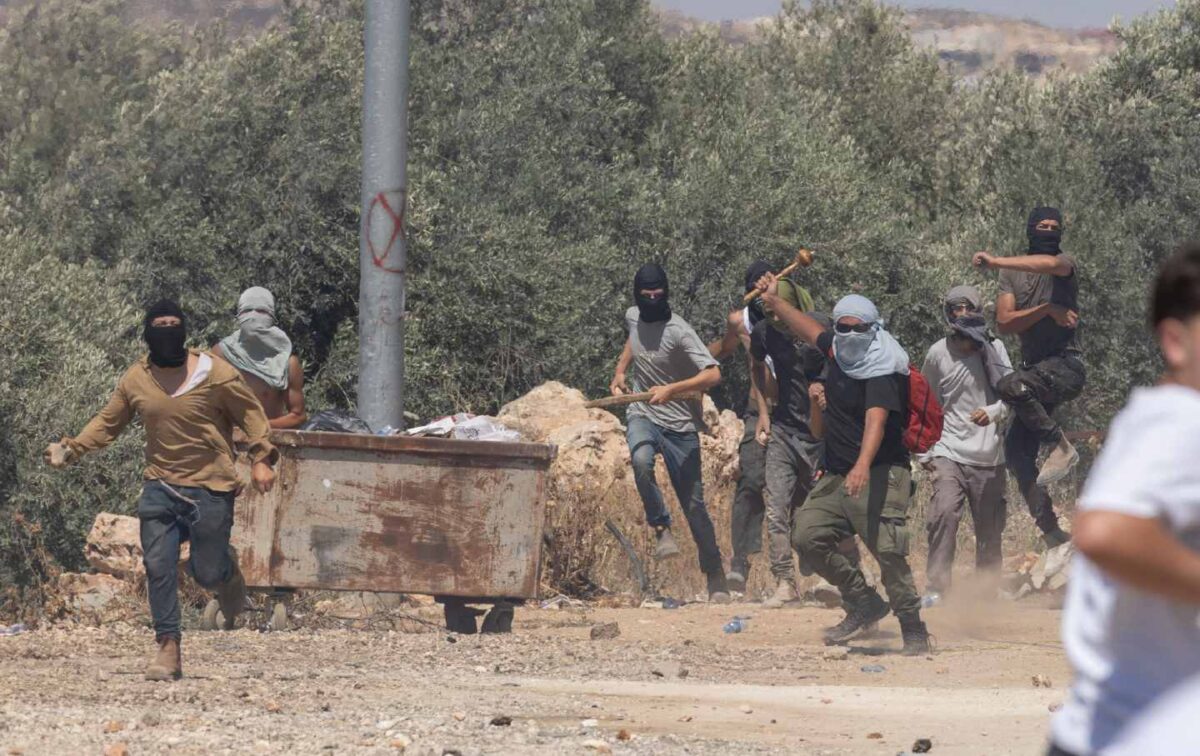
Israeli settler militias’ attacks intensified significantly, with the support of the occupation army, since the publication of our last edition on what is happening on the ground in the occupied West Bank and Jerusalem. This edition will cover the latest updates between March 10 and 22, especially the crackdown on Palestinians during Eid al-Fitr, observed/celebrated by Palestinian Muslims from the sundown of March 19 till March 22.
Settler Militias Violence
On March 21, settler militias rampaged through several villages, including Jalud, Fandaqumiya, Silat ad-Dhahr. In Jalud, southeast of Nablus, settlers set the village council building on fire, burned four vehicles, physically attacked and beat up Palestinians, injuring three. In Fandaqumiya, south of Jenin, settlers set several homes and vehicles on fire. In Silat ad-Dhahr, settlers beat up and injured a Palestinian protecting his home from being set on fire.
In one of the most severe assaults reported in recent months, on March 13, dozens of masked settlers raided the Palestinian community of Khirbet Humsa, in the northern Jordan Valley. The attack on Khirbet Humsa included beatings, torture, restraint of men, women, and children, attacks on foreign activists, threats to kill children and rape women, theft of property and livestock, as well as a sexual assault of a Palestinian man in front of his family members. In one of the testimonies, one of the men said that once the occupation forces have arrived, they detained Palestinian men which enabled the settlers to get away with all the livestock they stole, which they took to Beka’ot settlement.
Khirbet Humsa is a herding community in the northern Jordan Valley that has been subjected to repeated violent attacks by settler militias. Until July 2021, Khirbet Humsa was located on land that Israel had declared a firing zone decades earlier. After several evictions, the army demolished the homes of the community, which consisted of 11 families. The residents rebuilt their homes some distance from Khirbet Humsa. In general, Israel declared about 45% of the Jordan Valley as firing zones, pushing Palestinians to its edges and severely reducing grazing areas, which forced many to leave.
On March 14, in Kisan, south of Bethlehem, settler militias attacked the village and shot two Palestinians: a 52-year-old man and a 39-year-old man, and stole the livestock of around 100 sheep.
Occupation Forces Violence
On March 15, Israeli undercover forces traveling in a civilian car opened fire on a Palestinian family’s vehicle near the town of Tammun, killing both parents and two young children, as the family was on its way back home from buying Eid clothes and preparing for celebration. Occupation forces shot all four in the head or upper body with the intent to kill. Ali, 37, Waad, 35, and their children, Mohammad and Othman, aged 5 and 7 respectively, were all killed. Only Mustafa, 8, and Khaled, 12, survived, though they sustained shrapnel wounds to the face and head.
After firing dozens of bullets on the vehicle, soldiers pulled the two surviving children, Mustafa and Khaled, from the car and started to beat them, interrogated them, and blocked the ambulance from reaching the wounded and killed. Mustafa, only 8 years old, recounted to reporters how one soldier opened the car door and forced him to look at the family he killed while laughing hysterically.
Raids, Arrests, and Homes Turned Into Interrogation Centers
Since the start of Israel’s attack on Iran on February 28, Israeli forces have expanded their raids and arrest campaigns across the West Bank in multiple towns and refugee camps. Occupation forces carried out nightly incursions in areas including Nablus, Ramallah, Tulkarm, Hebron, and Jenin. They detained dozens of Palestinians, including minors. During these raids, soldiers searched and ransacked homes and, in many cases, assaulted residents.
In recent weeks, Israel has intensified the illegal seizure of Palestinian homes in the West Bank, converting them into temporary military barracks and, in some cases, field interrogation centers for detainees. On March 10, in the town of Duma, south of Nablus, occupation forces forced a family of nine to leave their home, then occupied it with around 50 troops for two days. Israeli forces have repeatedly used this practice, especially during periods of heightened escalation.
Control of Religious Sites
This has been the first Ramadan since Israel occupied East Jerusalem in 1967 that Palestinians have been unable to perform prayers at the mosque. Israeli occupation forces attacked worshippers with tear gas and stun grenades as they attempted to pray near al Aqsa on the morning of Eid al Fitr. Palestinians were chased by the IOF from the vicinity of the mosque and ultimately prayed some distance away. The closure of the mosque has been accompanied by a near-total lockdown of the Old City, where Al-Aqsa Mosque and dozens of normally vibrant Palestinian-run markets are located.
Palestinians view the closure of the mosque, an emblem of Palestinian identity, as part of a wider strategy by Israelis to entrench control over Al-Aqsa and the Old City, in an attempt to turn the site into a primarily Jewish place of worship under the cover of war with Iran. What is presented as a temporary measure could gradually become a permanent or semi-permanent arrangement, particularly if patterns of access to the site are altered.
There is a precedent for this with the Ibrahimi mosque, in the old city of Hebron. Following a deadly settler attack on the site in 1994, which killed around 29 Palestinians, the prayer hall was partitioned. Now, two-thirds of the space is reserved for Jews and the remaining third for Muslims.